

Health & WellBeing
Nigeria’s Lead Poisoning Crisis: 80 Million Children Reportedly Exposed as Government Launches New Plan
HEALTH | ENVIRONMENT | NIGERIA | 24 October 2026
Nigeria is facing a major public-health challenge over lead exposure, with a recent government figure cited by Leadership indicating that as many as 80 million children may be exposed to lead poisoning. The scale of the reported problem raises urgent questions about environmental safety, childhood development and the effectiveness of measures designed to protect vulnerable communities.
The concern comes as the Federal Government launches a five-year strategic plan aimed at preventing and eliminating lead poisoning, strengthening environmental surveillance and improving coordination among government agencies.
What is driving the crisis?
Lead is a toxic heavy metal that can enter the human body through contaminated dust, soil, water and food. Exposure can occur in communities affected by mining, unsafe battery recycling, industrial activities and products containing lead.
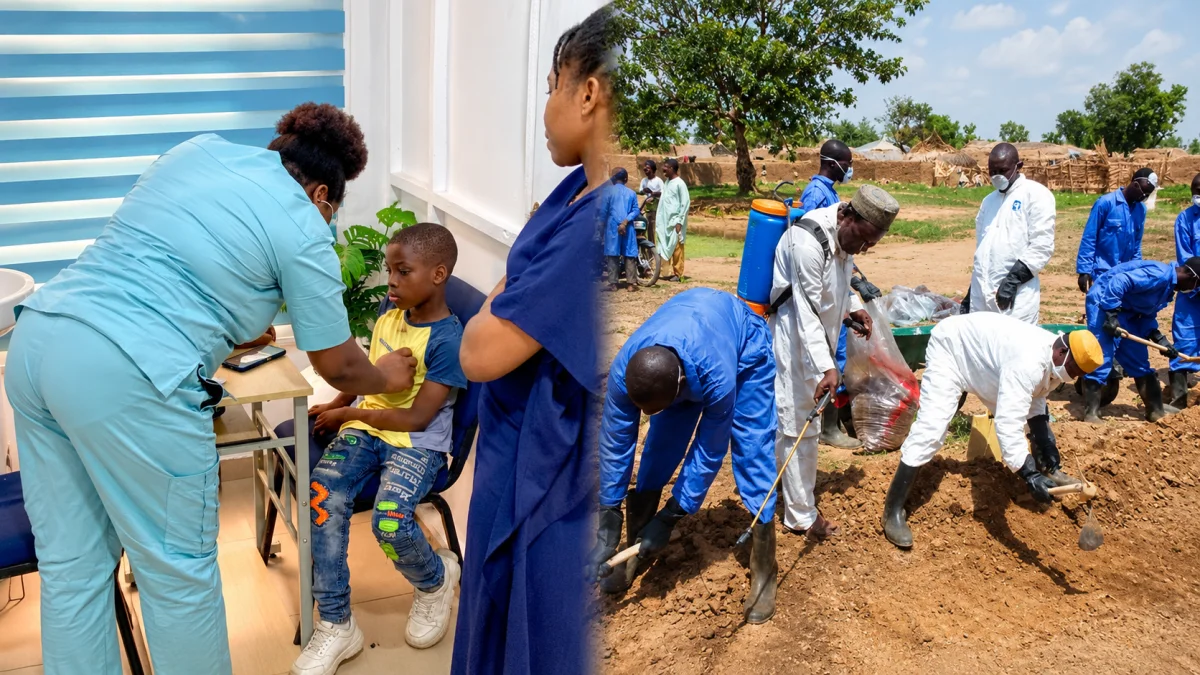
Nigeria has a documented history of severe lead contamination associated with artisanal gold mining in Zamfara State. Investigations following a 2010 outbreak linked extensive environmental contamination to unsafe mining and ore-processing practices. Children were particularly vulnerable because lead-containing dust entered homes and contaminated the places where they lived and played.
Informal battery recycling and occupational contamination are also important concerns. Workers can inadvertently carry hazardous dust into their homes on their clothing, footwear and equipment, exposing other household members.
Why children face particular danger
According to the World Health Organization (WHO), lead exposure can damage the developing brain and nervous system, impair learning and attention, contribute to anaemia and harm the kidneys. Severe poisoning can cause seizures, coma and death. Some harmful effects can occur even when a child does not appear visibly ill.
There is no known level of lead exposure that is entirely without harmful effects. This makes early detection, environmental testing and prevention essential, rather than relying only on treatment after exposure has occurred.
Pregnant women are also at risk because lead can affect fetal development. Protecting children therefore requires measures that safeguard entire households and communities.
Government launches five-year elimination strategy
The Federal Government announced the Five-Year Strategic Plan on Lead Poisoning Elimination on October 21, 2026, during activities marking International Lead Poisoning Prevention Week in Abuja.
According to the Federal Ministry of Information and National Orientation, the strategy is designed to strengthen environmental and workplace monitoring, improve laboratory capacity, reinforce regulatory enforcement and establish clearer referral pathways for people with elevated blood lead levels.
Federal Ministry of Info
The government has also established an Inter-Agency Working Group to coordinate the response across ministries, government agencies and other stakeholders.
Priority state-level action plans are being developed for Lagos, Ogun, Zamfara and Sokoto, reflecting the different potential sources of exposure in these locations.
Federal Ministry of Info
However, the announcement raises an important question: how quickly will the strategy translate into measurable reductions in lead exposure?
The plan's impact will depend on funding, enforcement, environmental clean-up, access to testing and treatment, and transparent reporting of progress.
What needs to happen next?
A sustained national response should include:
- Environmental testing: Regularly assess soil, drinking water and other potential sources of contamination in high-risk communities.
- Safer mining and recycling: Enforce protective standards and prevent toxic dust from spreading into homes and surrounding neighborhoods.
- Early detection: Expand access to blood lead testing, especially for children living near mines, recycling facilities and other suspected sources.
- Environmental clean-up: Remove or safely contain contaminated soil and dust, with appropriate technical oversight.
- Public education: Help families and workers understand how lead exposure occurs and how contamination can be carried home.
- Accountability: Publish clear targets, implementation timelines, funding information and independently verifiable progress reports.
The WHO recommends identifying and ending the source of exposure when elevated blood lead concentrations are detected. Dietary measures, including adequate iron and calcium intake, can support health but cannot substitute for removing the source of contamination.
The wider public-health implications
Nigeria's experience shows why lead poisoning cannot be addressed through hospital treatment alone. When contamination persists in soil, water or household dust, people may continue to be exposed even after receiving medical care.
The country's previous outbreaks, particularly in Zamfara, demonstrate the importance of combining medical treatment with environmental remediation and safer working practices.
The reported figure of 80 million children deserves particular attention. It should be communicated alongside its underlying methodology, the definition of exposure used, the date of the assessment and any available state-level breakdowns. Exposure does not necessarily mean that every child has clinically diagnosed lead poisoning, and the figure should not be interpreted as a confirmed diagnosis for each individual child.
Note:
Nigeria's lead-poisoning challenge demands more than policy announcements. It requires a coordinated effort to identify contamination, stop exposure at its source, protect children, support affected families and hold responsible institutions accountable.
The new five-year strategy provides a framework for action. Its real value will be measured by whether fewer children are exposed, contaminated communities are made safer and preventable harm is reduced.
The central test is implementation: can Nigeria turn its lead-poisoning elimination strategy into measurable protection for millions of children?
Sources and verification
Leadership - Nigeria’s Lead Poisoning Crisis - original editorial and reported exposure figure..