

Africa | News
Maasai Warriors Take on Lion Killings as Poisoning Threatens Wildlife in East Africa
Africa | Kenya & Tanzania | Wildlife | October 22, 2026
A conservation battle rooted in human-wildlife conflict
Efforts to protect Africa’s lions are gaining momentum as Maasai warriors and community conservation groups work to prevent retaliatory killings linked to conflicts between predators and livestock-owning communities.
The challenge is particularly significant in parts of Kenya and northern Tanzania, where pastoralist families depend heavily on cattle, goats, sheep and donkeys for their livelihoods. When lions attack livestock, some herders face substantial financial losses, creating tensions that can lead to revenge killings, including the suspected use of poison.
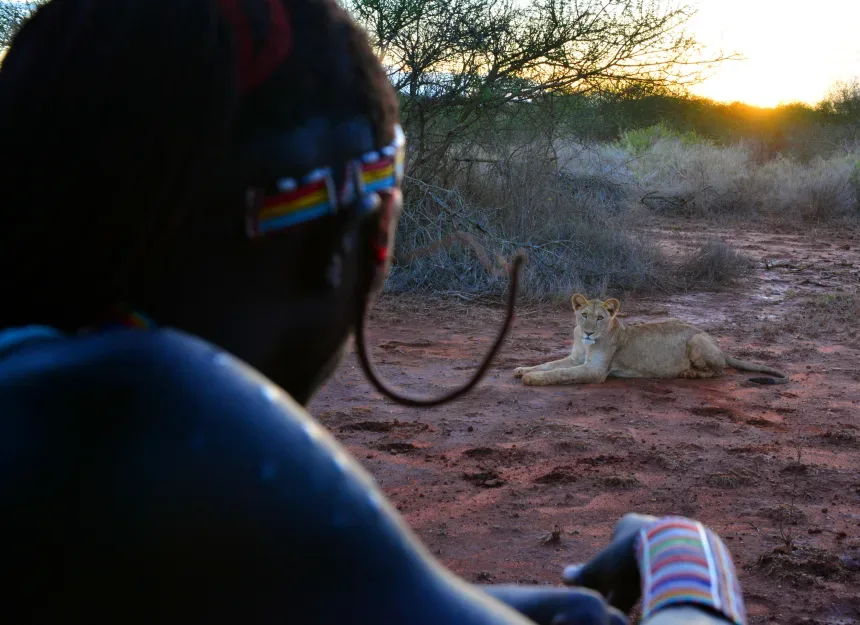
A recent report by CNN highlights how Maasai warriors are helping to change this pattern by working with local communities to protect livestock, monitor lion movements and discourage the killing of predators.
The issue demonstrates the difficult balance between protecting endangered wildlife and safeguarding the livelihoods of communities that have lived alongside wild animals for generations.
Ten lions found dead in Tanzania
The conservation challenge gained renewed attention in September after ten lions were found dead in the Ndutu area of Tanzania’s Ngorongoro Conservation Area, a UNESCO World Heritage site.
The Ngorongoro Conservation Area Authority said preliminary findings suggested the animals might have died after ingesting poison. Authorities launched an investigation to establish the cause of death and identify those responsible.
Local reports suggested the incident could have been connected to livestock losses involving lions. However, the precise circumstances and responsibility for the deaths had not been conclusively established in the reports available at the time.
The incident has intensified concerns about the use of poison in human-wildlife conflict. Poisoning can kill multiple animals at once and may also harm scavengers and other wildlife that feed on contaminated carcasses.
Conservationists warn that such incidents threaten lion populations and can undermine years of work to encourage peaceful coexistence between people and wildlife.
Why some herders retaliate against lions
For Maasai pastoralist communities, livestock represents much more than a source of income. Animals can provide food, household security, social status and a foundation for family livelihoods.
When lions kill livestock, the loss can be devastating, particularly for households with limited financial resources or few opportunities to replace the animals.
Research published in the journal People and Nature examined the relationship between livestock predation and lion killings among Maasai pastoralist communities in Kenya. The researchers found that retaliatory killings were associated particularly with losses caused by lions themselves, rather than livestock losses from other causes.
The study also found broad support for human-lion coexistence among the communities surveyed, challenging the assumption that Maasai pastoralists are uniformly opposed to protecting predators.
These findings suggest that conservation programmes must address the practical consequences of livestock attacks rather than rely exclusively on prohibitions against killing wildlife.
Maasai warriors become lion guardians
One approach gaining recognition is the use of respected Maasai warriors as community-based wildlife guardians.
Rather than treating local residents simply as a threat to conservation, these programmes involve community members directly in protecting lions and reducing conflict.
The guardians can monitor lion movements, alert livestock owners when predators are nearby, help prevent planned retaliatory killings and encourage safer livestock-management practices.
Their local knowledge, cultural standing and relationships within pastoralist communities can allow them to intervene in situations where outside conservation officials might struggle to gain trust.
The Wildlife Conservation Society’s SNAPP programme has documented the use of Lion Guardians in Maasailand, Kenya, alongside compensation schemes designed to reduce retaliatory killings.
These initiatives seek to make protecting wildlife compatible with community interests by reducing livestock losses and encouraging non-lethal responses to predator attacks.
Protecting livestock while protecting lions
Preventing conflict before it occurs is a central part of successful conservation work.
Measures used in different African conservation programmes include stronger livestock enclosures, better herding practices, early-warning systems, predator tracking and community response teams.
Compensation programmes can also help eligible livestock owners recover some of the financial losses caused by verified predator attacks.
In October 2026, the International Union for Conservation of Nature's Save Our Species initiative highlighted evidence from conservation projects across Africa showing that locally led approaches can reduce human-wildlife conflict.
Its reported interventions included improved livestock enclosures, monitoring systems and community partnerships. The findings reinforce the importance of involving residents in conservation decisions and ensuring that practical benefits reach the people who live alongside wildlife.
.
The wider challenge in Tanzania
The deaths in Ndutu occurred against the backdrop of longstanding tensions over land, grazing access and conservation policy in the Ngorongoro Conservation Area.
The area supports significant wildlife populations while also being home to Maasai pastoralist communities. Disagreements over how land should be used have made conservation decisions particularly sensitive.
Human-rights organizations supporting the Maasai International Solidarity Alliance called for an independent investigation into the lion deaths. They cautioned against blaming local residents before evidence establishes who was responsible and raised concerns that the incident could be used to justify additional restrictions on community access to grazing land.
These concerns are contested issues within a broader dispute over conservation management and relocation policy. They do not establish the cause of the lions' deaths or identify those responsible.
A credible investigation should therefore establish the scientific evidence, identify any offenders where possible and communicate its findings transparently.
Why the killings matter beyond East Africa
Lions play an important role in maintaining ecological balance, and their conservation has consequences beyond individual protected areas.
Poisoning incidents can affect entire food webs. A contaminated carcass may expose hyenas, vultures and other scavengers to the same poison that killed the original animal.
Lion deaths can also affect wildlife tourism, which provides employment and income for guides, hospitality businesses and communities in many safari destinations.
The International Union for Conservation of Nature classifies lions as vulnerable, with threats including habitat loss, declining prey populations and conflict with people.
Preventing retaliatory killings is therefore not only about protecting individual animals. It is also about maintaining functioning ecosystems and finding durable solutions to the pressures facing people who share landscapes with wildlife.
Note:
The work of Maasai warriors and community-based conservation teams illustrates an important principle: wildlife protection is more sustainable when local communities are partners in the solution.
Preventing revenge killings requires more than asking herders to tolerate losses. It calls for practical livestock protection, fair responses to wildlife damage, meaningful community participation and investigations that establish facts before assigning blame.
The suspected poisoning of ten lions in Tanzania underscores the urgency of that task. Authorities must establish what happened, while conservation programmes continue helping communities protect their livelihoods without resorting to the killing of predators.
The long-term question is whether governments, conservation organizations and local communities can build a system in which protecting lions also supports the people who live alongside them.
Source: Wildlife Conservation Society — Lion Guardians and predator compensation.